
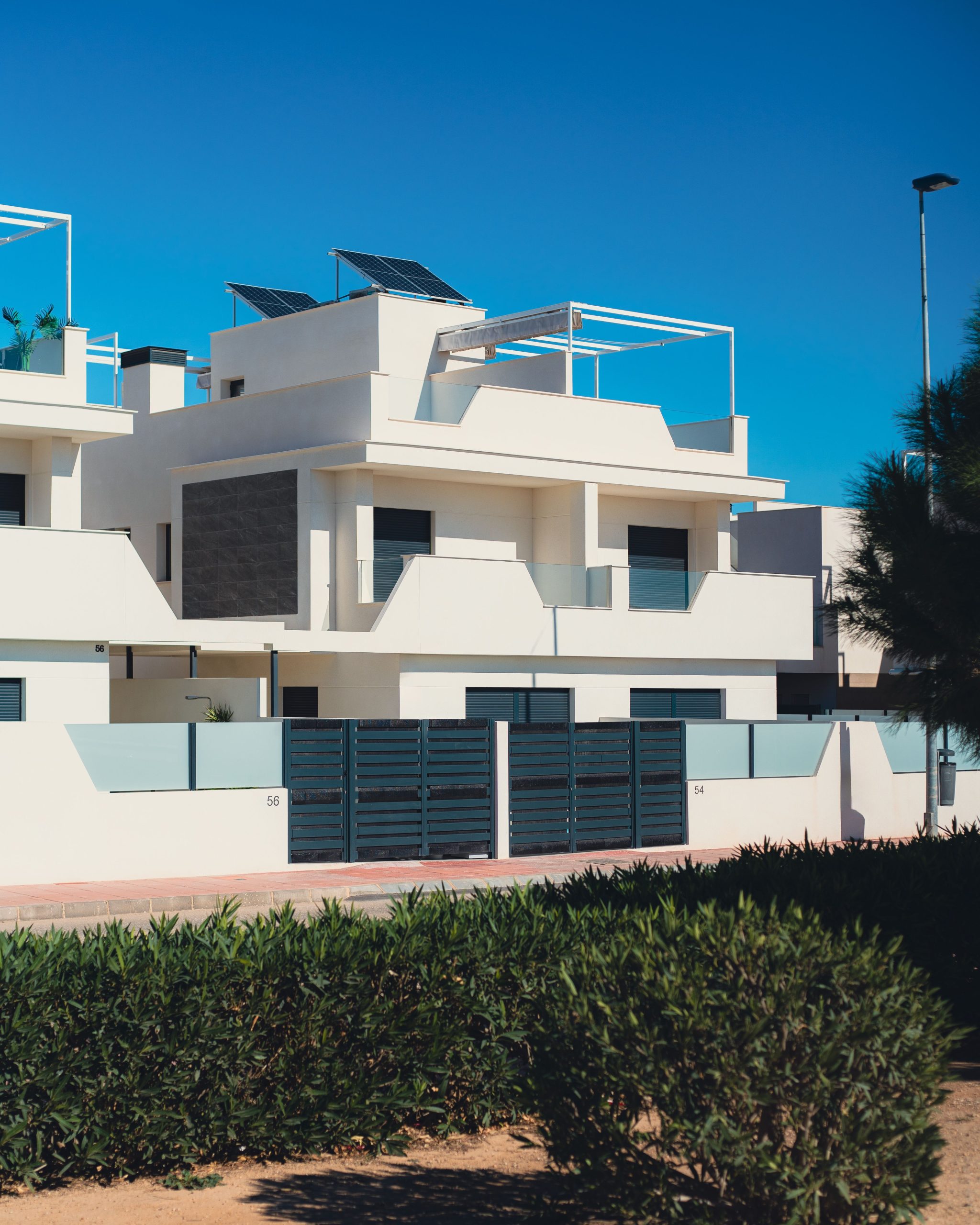
There is a particular kind of optimism that takes hold when you first consider living off-grid in Spain.
The sun shines for approximately eleven months of the year, the countryside is beautiful and electricity appears to be falling out of the sky for free. You imagine a modest collection of solar panels, a vegetable garden and evenings spent drinking something inexpensive beneath an olive tree.
What could possibly go wrong?
August, mostly.
August is when Spain reminds you that sunshine and comfortable living are not necessarily on speaking terms.
The Great Solar Paradox
Spain has an abundance of sunshine. This is excellent news for anyone hoping to generate their own electricity and less excellent news for anyone hoping to survive without refrigeration.
In winter, the problem is getting enough sunlight into your batteries. In summer, the problem is finding somewhere to hide from it.
The irony is rather magnificent.
Your solar panels may be producing electricity quite happily while you sit indoors wondering whether it’s possible to climb inside the fridge without damaging the shelves.
And the moment you introduce air conditioning, your carefully calculated electricity requirements begin to look like something invented by an exceptionally optimistic estate agent.
A fan uses relatively little power. Air conditioning is another matter entirely. A few hours of cooling can consume a substantial portion of the electricity you’ve spent all day collecting.
Suddenly, living off-grid involves rather more arithmetic than you anticipated.
Batteries Are Wonderful Until They Aren’t
There’s something deeply satisfying about watching a battery charge from sunlight.
It feels like cheating the system.
Unfortunately, batteries have limits, and those limits become considerably more interesting when it’s 35 degrees outside and everyone in the house wants a cold drink.
A battery that comfortably runs the lights, television and fridge might struggle once you add air conditioning, a washing machine and somebody deciding that now would be an excellent time to use the oven.
The trick, apparently, is to use electricity when the sun is producing it.
This sounds straightforward until you discover that your preferred time for cooking dinner is not three o’clock in the afternoon.
Or that the washing machine, dishwasher and water pump have developed an unfortunate habit of operating simultaneously.
A properly designed system accounts for these things. A system assembled on the basis of that should probably be enough tends to provide rather more educational experiences.
The Roof Is Hotter Than You Think
Solar panels like sunlight. They are less enthusiastic about excessive heat.
As panel temperatures rise, their electrical efficiency generally falls. That doesn’t mean solar panels stop working in August. Far from it. But a blazing Spanish afternoon isn’t necessarily the perfect generating environment people imagine.
The angle of the roof, ventilation beneath the panels, orientation and occasional shading all matter.
Dust matters too.
Anyone living in rural Spain knows that dust has an extraordinary ability to settle on absolutely everything. Cars, windows, outdoor furniture, the dog. Solar panels are not exempt.
After a prolonged dry spell, a layer of accumulated dirt can reduce output, although the effect depends on the amount and type of soiling.
Cleaning panels isn’t necessarily complicated, but climbing onto a hot roof in August with a bucket of water is an activity best left to somebody properly equipped and competent.
Preferably somebody else.
And Then There’s the Water
Electricity is only half the story.
Water is where the romantic vision of rural self-sufficiency begins to encounter reality.
A vegetable garden sounds wonderful until you realise that tomatoes require water with a persistence bordering on harassment.
The trees need watering. The chickens need water. People insist on showering.
If you’re relying on stored water, a well or deliveries, August can become an exercise in watching levels fall while trying not to look concerned.
Rainwater collection is useful, but collecting rainwater requires rain.
This is a small but important detail frequently omitted from the brochures.
We’ve written before about the peculiarities of small-scale solar power on cloudy days, but water brings its own set of complications. You can’t simply install another battery and hope for the best.
The Temptation to Buy More Equipment
One of the unexpected consequences of trying to live simply is the remarkable quantity of equipment you can end up owning.
You begin with a few solar panels.
Then you need batteries.
Then a better inverter.
Then something to monitor the batteries.
Then a replacement for the thing that monitors the batteries because it has inexplicably stopped talking to your phone.
Before long, your supposedly simple lifestyle includes more electronic equipment than a small regional airport.
This isn’t an argument against solar power. Quite the opposite.
It’s an argument for working out what you actually need before buying things.
There is a substantial difference between powering a small rural cabin and running a family home with air conditioning, a pool pump and all the usual domestic appliances.
For people living closer to the coast, companies such as Jávea Solar deal with the practicalities of solar panels, batteries and household electricity requirements in the local climate.
The important part is getting the system designed around how a property is actually used rather than how its owners imagine they might behave after becoming enlightened, environmentally responsible versions of themselves.
Those two households are rarely identical.
The Neighbours Have Usually Worked This Out Already
One of the advantages of living in rural Spain is that somebody nearby has probably spent the last thirty years solving the problem you’ve only just discovered.
They know which side of the house stays cool.
They know when to close the shutters.
They know that watering the garden at lunchtime is an excellent way to waste water.
And they know that doing anything remotely strenuous between two and five in the afternoon is a questionable lifestyle choice.
Much of traditional Spanish rural living is built around accommodating the climate rather than attempting to defeat it.
Thick walls, shaded terraces, shutters, courtyards and sensible daily routines existed long before anybody invented a smart thermostat.
Sometimes the most environmentally friendly technology is a window you remembered to close before the heat arrived.
Perhaps Off-Grid Living Isn’t About Having Everything
The difficulty with modern ideas about self-sufficiency is that we often expect them to deliver exactly the same lifestyle we’re trying to escape.
We want independence from the electricity company, but we still want every appliance running whenever we fancy.
We want to reduce consumption, but we’d rather not be inconvenienced.
We want to live closer to nature, provided nature maintains a comfortable indoor temperature and doesn’t interfere with the Wi-Fi.
There’s nothing particularly wrong with wanting comfort. Life is difficult enough without voluntarily turning your home into a survival exercise.
But the interesting part of living more sustainably is learning which conveniences genuinely matter and which ones we’ve simply become accustomed to.
Sometimes that means better equipment.
Sometimes it means running the washing machine at midday.
And sometimes it means accepting that August in Spain is hot, closing the shutters and going to sit under a tree.
Preferably with a cold beer.
Assuming the fridge is still working.
Leave a Reply